
STEP BY STEP: Complete doesn’t mean finished
Step by Step is the blog of Kate Kerin Interiors. In addition to following some of my clients’ projects, I examine some of the latest issues of interest in the world of interior design.
I’m currently heading towards the “finishing point” on a couple of projects. After months of working closely with the homeowners, one is now waiting on just a few final touches, a custom rug ordered many months ago and painstakingly crafted by hand, along with some cushions and a lamp. Another needs art on the walls and the delivery of one or two final furniture pieces.
I’m already feeling a little nostalgic. Both have been genuinely rewarding projects with lovely clients, and I’ll miss the regular check-ins, the shared excitement of finding the perfect piece for a room, and the pleasure of bringing everything together at the styling stage. That said, my motto has always been “once a client, always a client”, and I hope that somewhere down the track these families will return, whether to refresh their existing home or to shape a new one if they move. For me, that ongoing trust is the ultimate compliment. And, of course, there are new people to meet and projects to undertake so the design cycle continues afresh.
Is a Home Ever Truly Complete?
One of the questions I’m asked from time to time is, “When will it be finished?” Sometimes this comes from a place of fatigue, mid-project and surrounded by samples, decisions and delivery schedules. Other times it’s asked with genuine curiosity, as people look ahead to life in a newly renovated or newly furnished home and wonder when they’ll be able to draw a line under the process.
The honest answer is that most beautiful homes are never truly finished. They are resolved, comfortable and deeply functional, but they continue to evolve alongside the people who live in them. At certain stages of life, particularly when downsizing or making a significant change, the idea of “complete” is less about perfection and more about confidence. Confidence that the home works now, will continue to work into the future and has been shaped with care rather than haste.
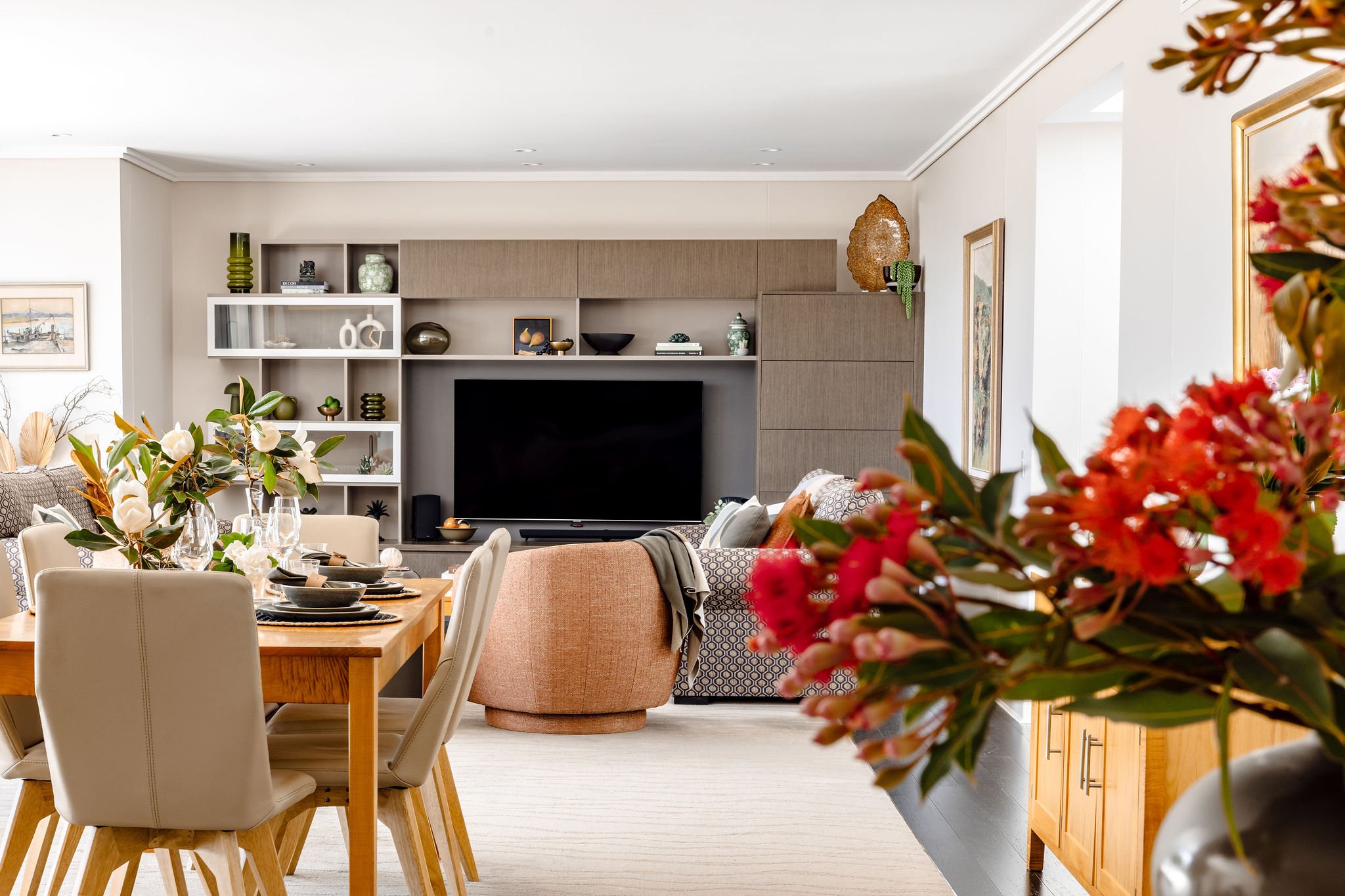
Image: @kathatfieldcreative
Starting with the Right Foundation
For many people moving into an apartment or smaller home, the most important investment happens before a single piece of furniture is moved in. Spatial planning is critical, and it’s often underestimated. Moving from a large family home into a more compact space can feel daunting, not because of size alone but because every room needs to work harder.
Storage, circulation and functionality all need to be considered early. How do you move through the space day to day? Where do coats, shoes, books and paperwork live? How often do you entertain, and how many people do you need to seat comfortably? These questions shape the success of a home far more than any individual furniture choice.
Good spatial planning allows a smaller home to function just as well as a larger one. In some cases, this means custom joinery designed to maximise storage without overwhelming the room. In others, it might mean rethinking furniture placement to improve flow and make spaces feel more generous and calm. Some homes require walls to be moved to create better flow or add functionality to specific spaces. Older homes are particularly notorious, as our desire for open plan living (while maintaining the option of privacy) has grown over the decade
Futureproofing is an important part of this conversation too. Wider walkways, sensible lighting, comfortable seating heights and intuitive layouts all contribute to a home that will support you as the years go by. These aren’t dramatic gestures, but they are deeply valuable ones, and they are much easier to incorporate at the planning stage than later on.
Colour as a Quiet Reset
One of the simplest yet most transformative ways to bring a home closer to feeling resolved is through paint. Colour has an extraordinary impact on how a space feels, emotionally as well as visually. A considered paint scheme can brighten a home, create cohesion between rooms and gently update a space without changing its bones.
Rather than chasing what’s new or fleeting, it’s far more useful to think about how you want your home to feel. Soft, layered neutrals can create calm and continuity. Deeper tones, used selectively, can add warmth, intimacy and a sense of depth. Advances in colour theory mean we now understand far more about how undertones, natural light and finishes affect mood and perception.
Paint is also wonderfully flexible. It allows a home to be refreshed every decade or so without major upheaval, making it a smart, long-term investment for anyone who wants their home to evolve without constant renovation.
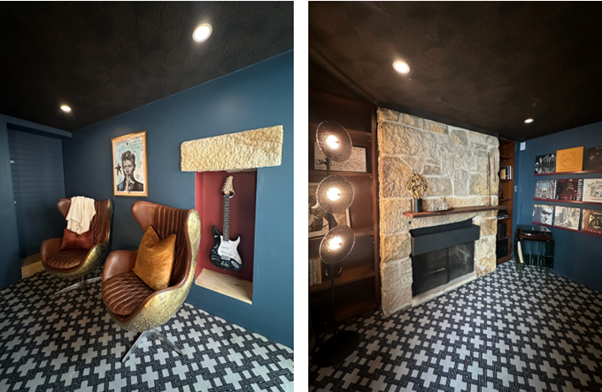
Bold colour can highlight a special space
Investing in Pieces That Matter
Furniture is often where the idea of completeness feels most loaded. There’s a temptation to want everything finished at once, every room fully furnished, every corner resolved. In practice, the most enduring interiors are usually layered over time.
A far more satisfying approach is to invest in key pieces that anchor the home, then allow other elements to follow thoughtfully. A well-made sofa, a beautiful dining table or a comfortable, considered bed can set the tone for an entire space. These are the pieces you interact with every day, and quality matters.
Well-made furniture not only lasts longer, it ages better. Timber develops character, leather softens, fabrics settle and relax. Artisan-made and original pieces bring a depth that mass-produced items often lack, and they tend to feel relevant for decades rather than years.
This doesn’t mean everything needs to match, or even come from the same period. In fact, mixing old and new is often what gives a home its soul. A contemporary sofa can sit beautifully alongside a cherished cabinet or side table with history. The key is balance, scale and a unifying thread, whether that’s material, proportion or colour.
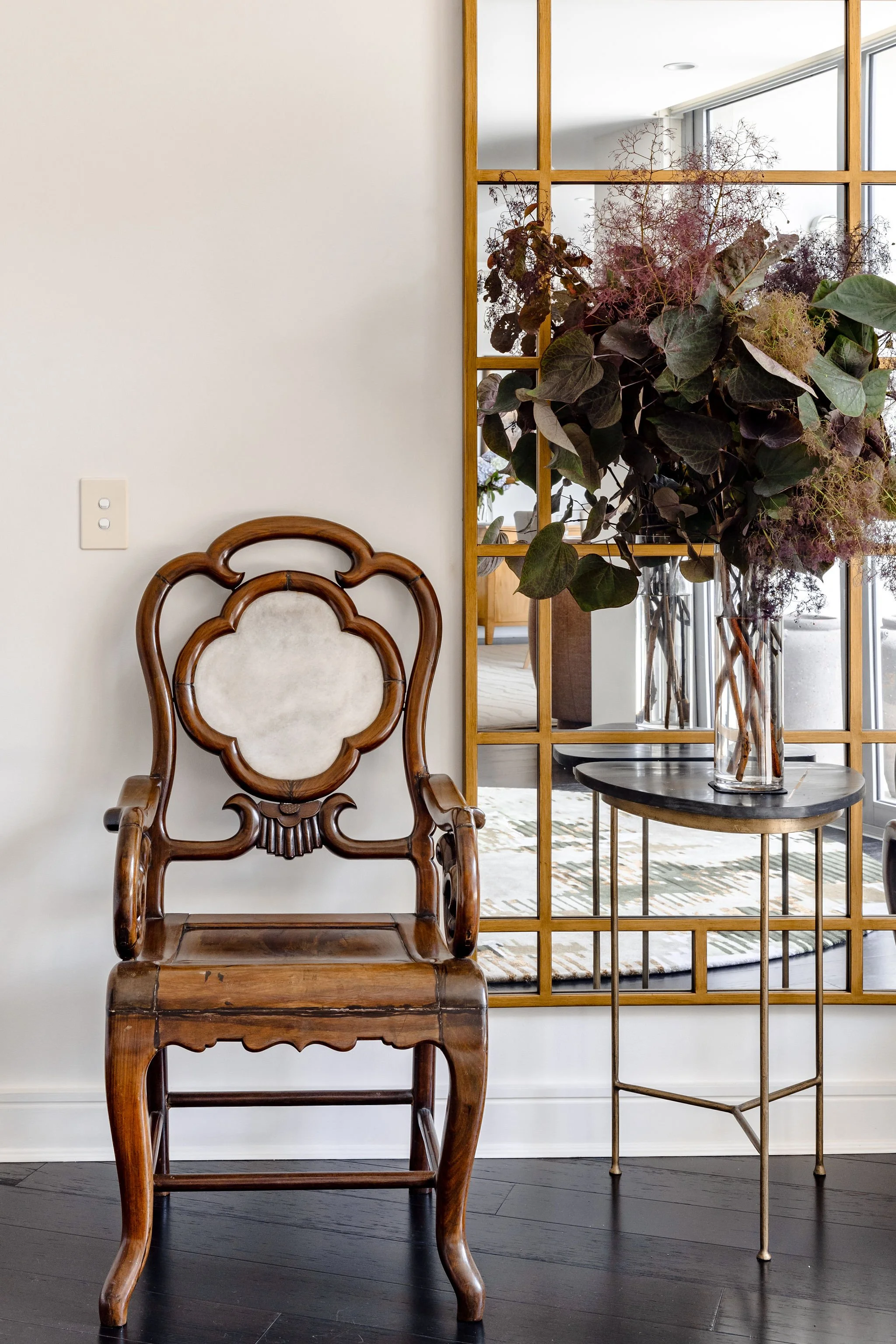
An antique opium den chair, collected on treasured overseas jaunts. Image: @kathatfieldcreative
Holding On to What You Love
One of the great joys of working with people at this stage of life is helping them integrate pieces they already love into a new context. Downsizing doesn’t mean starting from scratch. It means being selective.
Furniture, art or objects with emotional significance deserve to be treated with respect. Sometimes that means restoring or reupholstering rather than replacing. Other times it means giving a piece more space to breathe, allowing it to become a focal point rather than part of a crowded arrangement.
This thoughtful editing is often what elevates a home. When fewer pieces are given more importance, the result feels intentional and calm rather than busy.
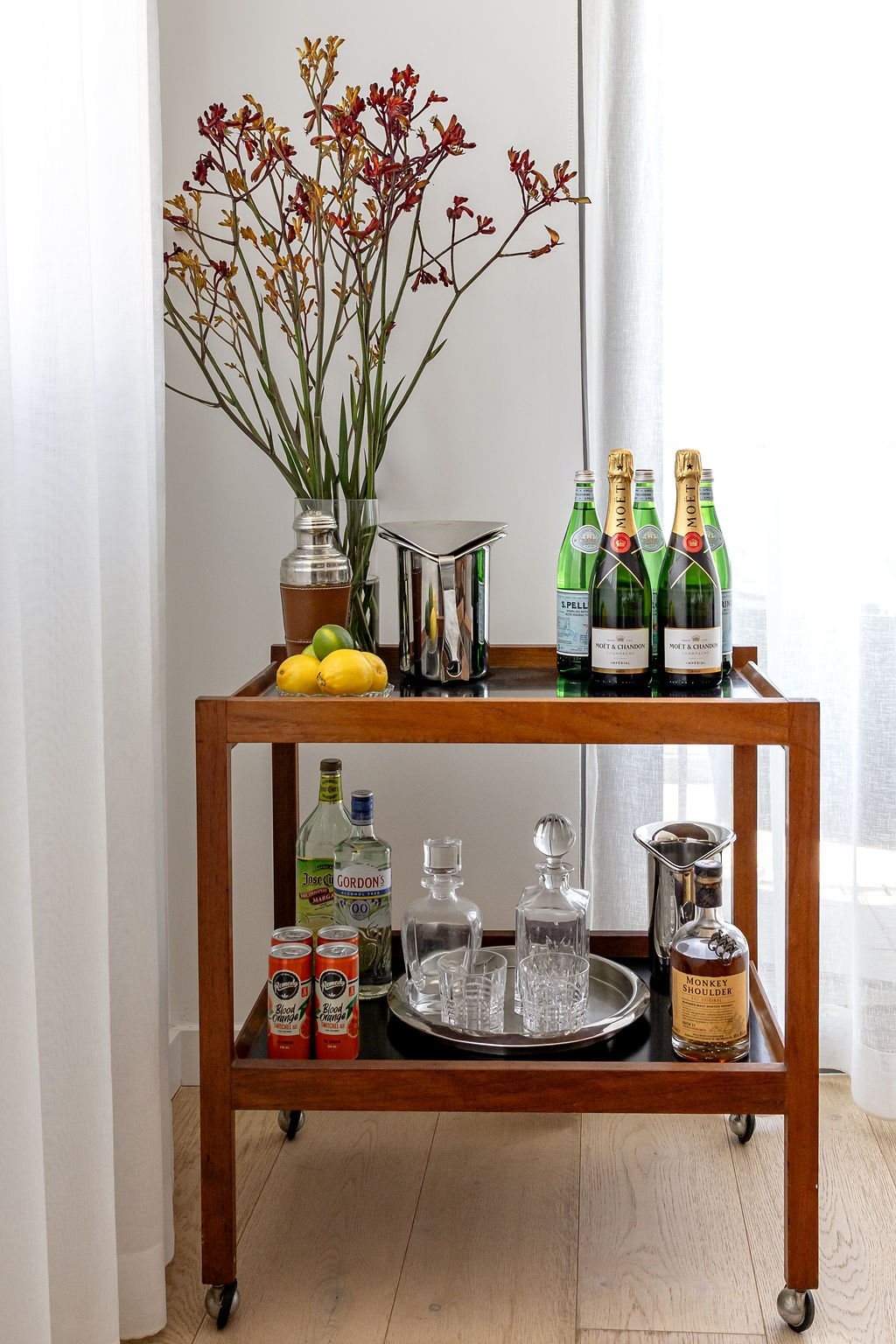
A cherished bar cart graces a corner of this home.
Image: @kathatfieldcreative
Art and Personal Objects
If furniture provides structure, art and personal objects provide meaning. These are the elements that make a house feel like a home, and they are rarely chosen all at once.
Original artwork, handmade ceramics, books and objects collected over time all contribute to a layered, personal interior. They also allow a home to continue evolving.
Art can be moved, rotated or added to gradually, refreshing a space without major change.
Investing in original or artisan-made work can feel like a significant step, but it’s often one of the most rewarding. Art brings emotion into a space. It anchors colour palettes, sparks conversation and creates a sense of intention that no amount of styling alone can achieve.
Soft Furnishings and Seasonal Change
One of the gentlest ways to keep a home feeling fresh, without constant spending, is through soft furnishings. Cushions, throws and bed linen are hardworking elements that can be changed seasonally, then rotated and reused so nothing feels wasteful.
Lighter linens and cottons work beautifully in warmer months, while richer textures and deeper tones add comfort as the weather cools. When chosen thoughtfully, these pieces can last for many years, reappearing and rotating through the seasons like familiar friends rather than disposable updates.
This approach reinforces the idea that a home doesn’t need to be static to feel complete. Subtle, seasonal shifts can bring renewed enjoyment without undermining the sense of cohesion.
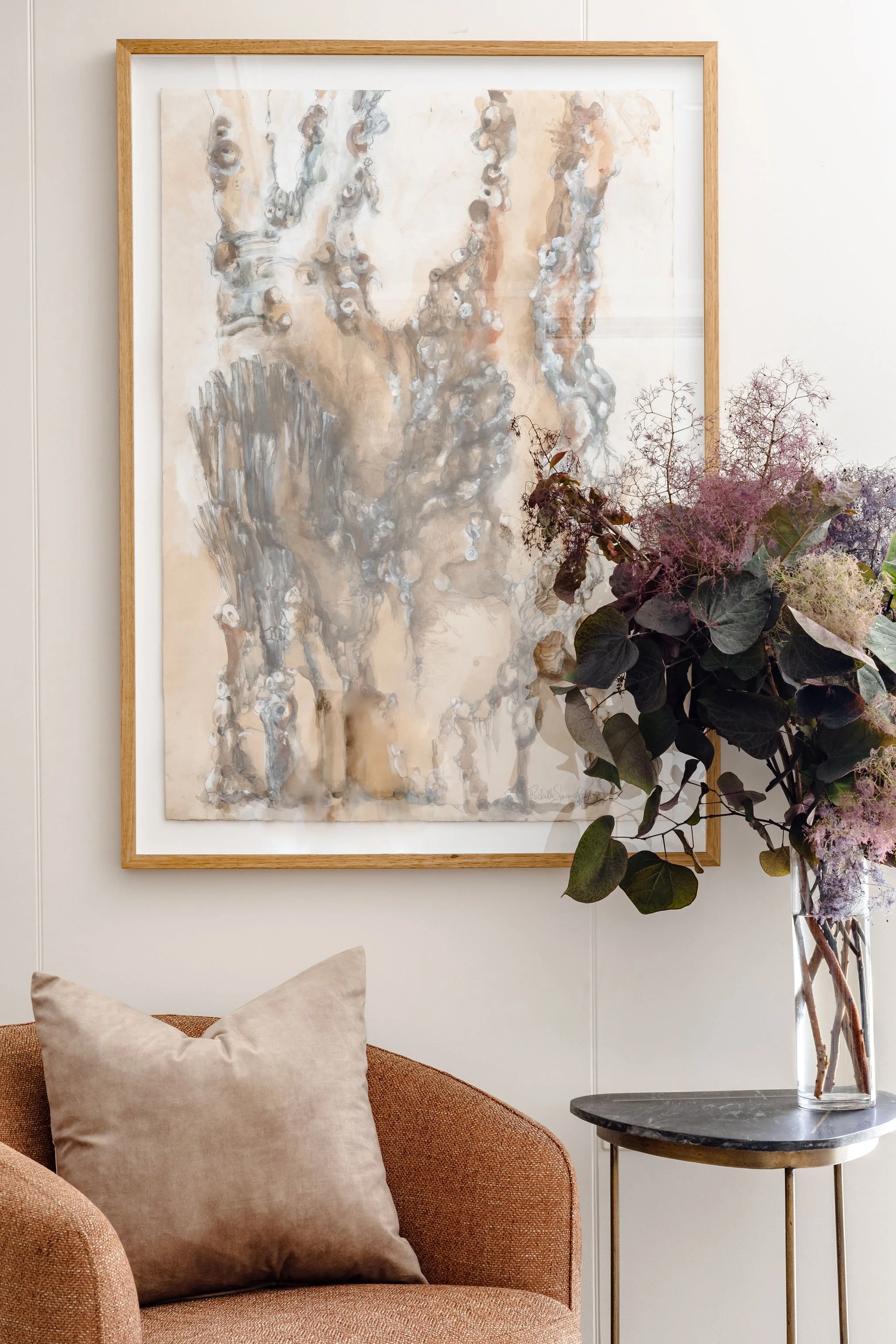
Greenwich downsizer penthouse
Image: @kathatfieldcreative
Artwork: @rochelleartist
Knowing When to Pause
One of the most important lessons in creating a long-lasting home is knowing when to stop. There is a point at which a space feels settled, even if every wall isn’t filled or every corner isn’t styled.
Allowing visual breathing room is part of good design. A room doesn’t need every surface decorated to be successful. In fact, restraint often allows key pieces to shine and gives the home a sense of ease.
Living in a space for a while also reveals what’s truly missing and what isn’t needed at all. This pause is valuable. It prevents rushed decisions and helps ensure future additions feel considered rather than reactive.
A Different Definition of Complete
Perhaps the most useful way to think about completeness is this: a home is complete when it supports your life, reflects your values and allows room for change. It’s when the big decisions have been made well, the foundations are strong and the remaining choices can unfold slowly.
Investing wisely rather than quickly, prioritising spatial planning, quality materials, timeless pieces and thoughtful details all contribute to a home that stands the test of time. These homes don’t need constant updating. They grow richer through use, memory and subtle evolution.
Kate Kerin Interiors works with discerning Sydney clients who value quality, elegance and a seamless design experience, whether you’re downsizing, furnishing a new home or planning a major change. If you’d like to discuss your project, get in touch to book an initial consultation.
If you enjoyed this blog, subscribe to my newsletter for curated interior design insights, inspiration and practical tips delivered straight to your inbox.