

STEP BY STEP: Small kitchen; Big thinking
Step by Step is the blog of Kate Kerin Interiors. In addition to following some of my clients’ projects, I examine some of the latest issues of interest in the world of interior design.
Despite seasonal shutdowns and many suppliers taking a well-earned break, my Glebe project has been forging on. Christine and Larry will be downsizing into a fabulous three-bedroom apartment, once a major renovation is completed. Having now engaged builder Sean Ducrest of BuildCrest Projects, we are finalising key design elements in order to gain Body Corporate approval for our plans. Chrissie is knee deep in inspirational images, and we have road trips planned in the coming weeks to select stone and appliances.
As the Glebe project revs up, another beautiful project in Birchgrove is winding down and clients Melissa and Grant are starting to enjoy their new furniture and décor. You’ll recall this home included a dark, unused internal space with no windows. That area has now been transformed into a moody, contemporary music room where Grant can indulge his love of vinyl recordings and a good whiskey. With bold colours, soft geometric carpet, a gold metallic curtain and a wallpapered ceiling, the room has become one of the most characterful spaces in the home. Elsewhere, comfy sofas, gallery-worthy side tables, billowy sheer curtains and a custom rug are either installed or on their way. With just a few finishing touches to go, Melissa and Grant are now able to truly lean into their revamped home.
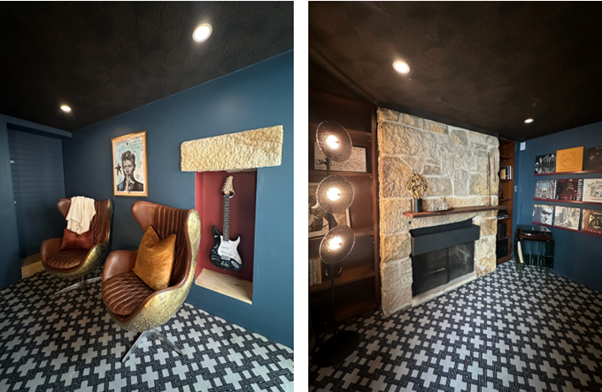
Birchgrove music room
Writing about these projects has reminded me how often kitchens become the emotional and practical heart of downsizing and apartment living. When space is limited, the kitchen carries more weight than ever, and good design becomes essential rather than optional.
Why kitchens matter more in small homes
In a compact apartment or townhouse, the kitchen is rarely a standalone room. It is usually part of a larger living zone, highly visible and in constant use. For downsizers in particular, the kitchen often represents continuity, as it is where rituals, routines and family habits live on, even as the home itself becomes smaller.
There is less room for compromise in a small kitchen. Every cupboard, every surface and every appliance choice matters. A poorly planned layout will feel frustrating very quickly, while a thoughtful one can make a modest space feel calm, generous and surprisingly luxurious.
I often reassure clients that a smaller kitchen does not mean a lesser kitchen. In fact, the opposite can be true. When space is tight, decisions tend to be more deliberate, and the result is often more refined. I really love working with clients in a smaller kitchen footprint – it’s where creativity sits side-by-side with practicality.
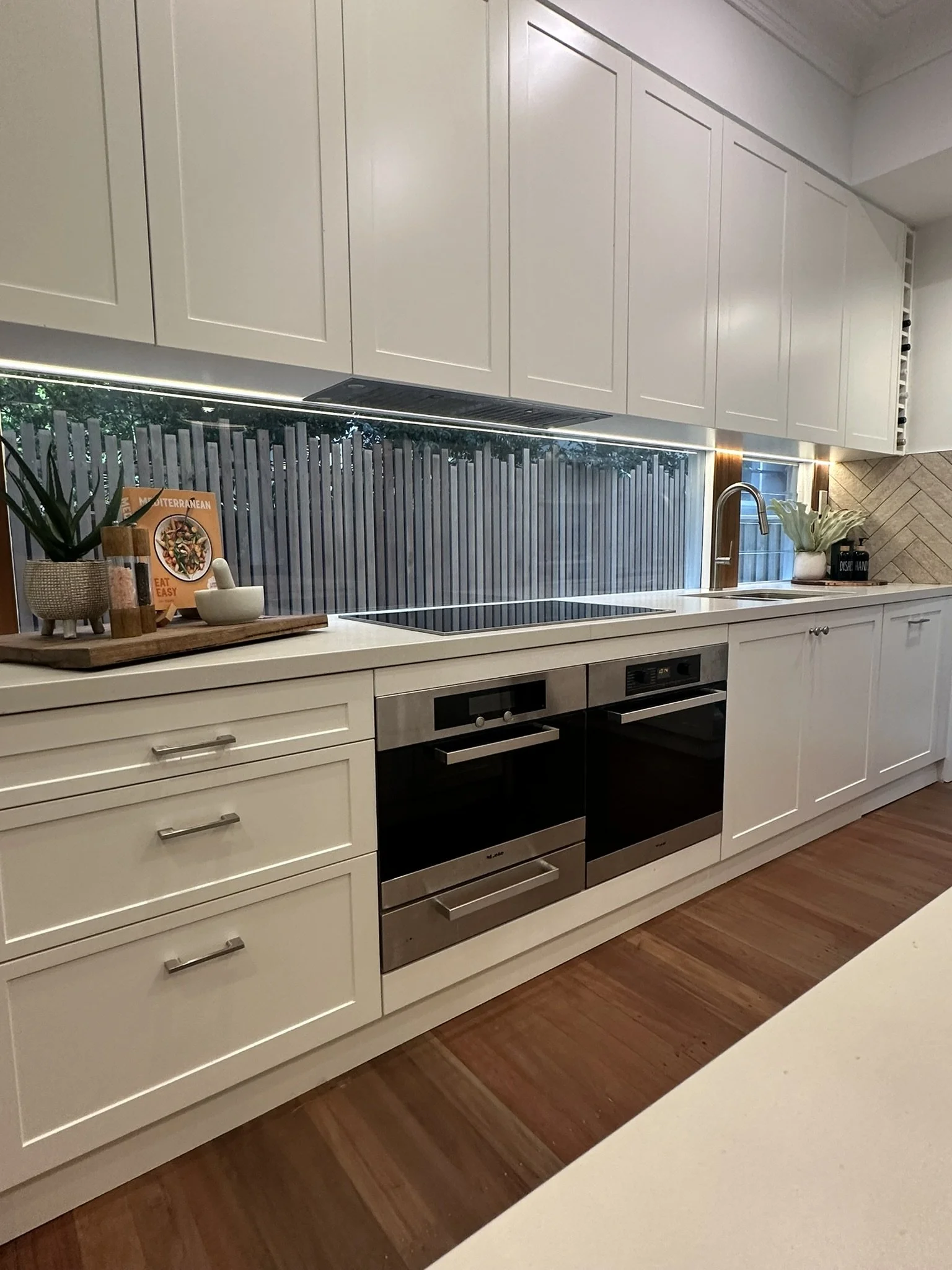
A galley-style layout works well in smaller spaces as well as larger kitchens
Start with layout, not looks
One of the most common traps I see clients fall into is focusing on finishes before the fundamentals are resolved. Beautiful images are inspiring, but without the right layout they are just that, images.
In small kitchens, layout is everything. How you move through the space, where appliances sit, how doors open and where you land groceries all matter enormously. Getting this right requires a clear understanding of how the kitchen will be used day to day, not just how it will photograph.
In apartment projects, layout is often influenced by factors beyond our control, including plumbing locations, structural walls and Body Corporate requirements. This is where early design work pays off. Understanding constraints from the outset allows the layout to be resolved logically, rather than forcing compromises later.
Once the layout is right, everything else becomes easier. The kitchen starts to feel intuitive rather than forced, and decisions about finishes fall into place more naturally.
Stone, cabinetry and the big visual decisions
Once the layout is locked in, attention usually turns to finishes. Of all the choices to be made, stone is often the most influential. Benchtops are highly visible, used constantly and set the tone for the entire kitchen.
In smaller spaces, I encourage clients to think carefully about visual weight. Strong veining, heavy contrast or multiple materials can overwhelm a compact kitchen very quickly. That doesn’t mean avoiding interest altogether, but rather choosing finishes that feel cohesive and considered.
Cabinetry is another area where restraint pays dividends. Mixing too many colours, textures or profiles can make a small kitchen feel busy. I often suggest letting one element take the lead, whether that is the stone, a subtle colour or a beautiful timber tone, and allowing everything else to support it.
This is also where showroom visits need to be purposeful. Wandering through endless options without a clear brief can quickly become overwhelming. When selections are guided by a defined palette and layout, the process becomes far more enjoyable and efficient.

Showstopper stone (Montecarlo Antico marble)
Storage is everything, but it doesn’t have to shout
In small kitchens, storage needs to work hard without visually dominating the space. Full-height cabinetry can be a smart move, providing generous storage while creating clean vertical lines. When detailed well, it can feel architectural rather than bulky.
Integrated appliances are another invaluable tool. Concealing fridges and dishwashers helps the kitchen read as furniture rather than equipment, particularly in open-plan apartments.
Open shelving is something clients often ask about, and it can work beautifully in the right context. In smaller kitchens, however, it needs to be used sparingly. A short run of shelves for everyday items or a favourite piece or two can add warmth, but too much open storage can quickly tip into clutter. The same can be said for butler’s pantries, where we tend to hide things we don’t want on display in the main kitchen.
Good joinery should feel like it belongs to the home, not just the kitchen. Thoughtful proportions, discreet handles and quality finishes make a significant difference, especially when the kitchen is always on display.
Light, materials and creating a sense of space
Lighting is one of the most underestimated elements in small kitchens. Layered lighting, combining general, task and ambient sources, can dramatically change how a space feels. Under-cabinet lighting, well-placed pendants and dimmable fittings all contribute to a kitchen that works beautifully day and night.
Material selection also plays a role in how spacious a kitchen feels. Reflective surfaces can bounce light around, but they need to be balanced to avoid glare. Texture is often more successful than pattern, adding depth without visual noise.
Subtle contrast is usually more effective than bold statements in compact kitchens. Slight tonal shifts, changes in finish or gentle variation in materials can create interest without overwhelming the space.
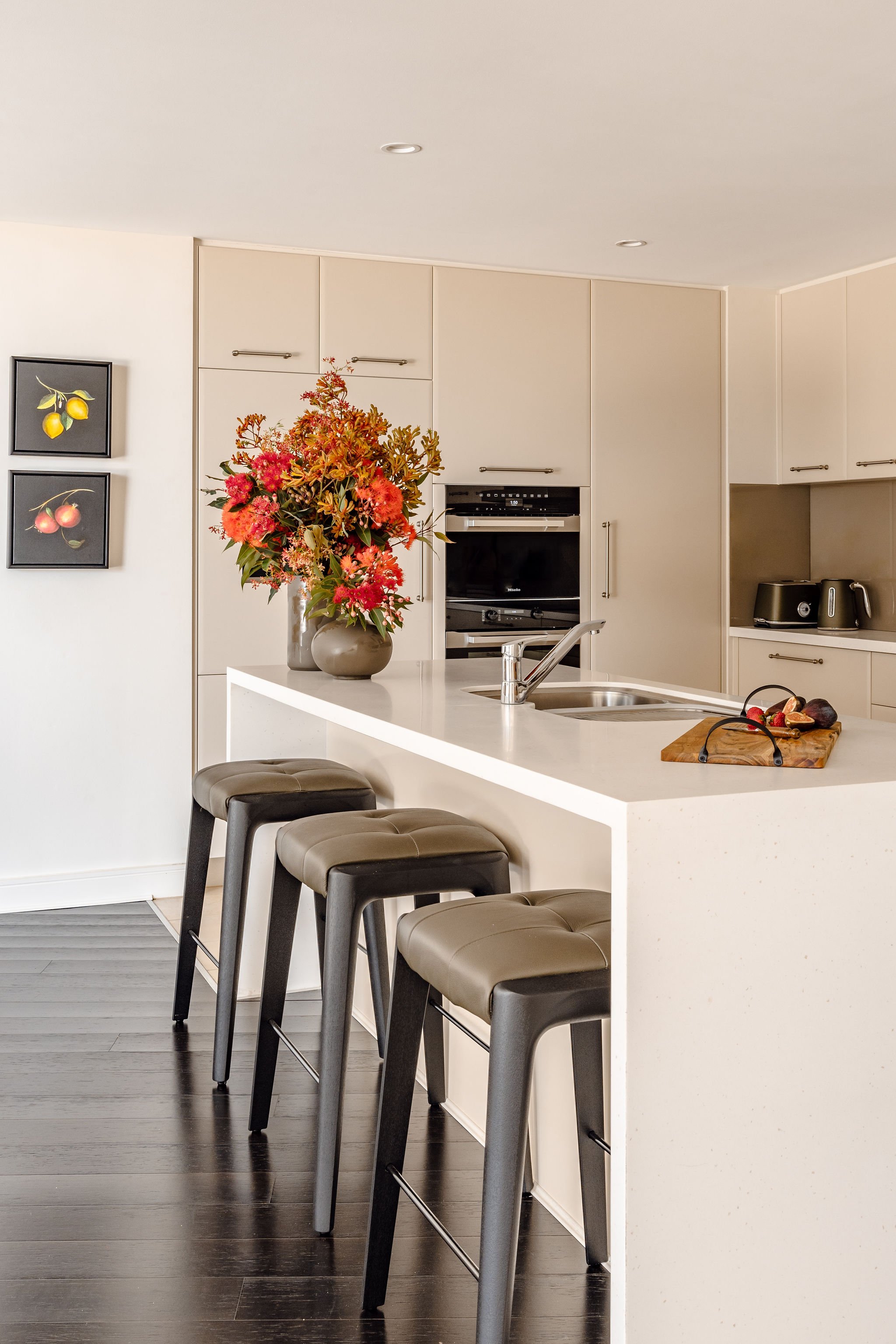
Loads of storage in this downsizer’s kitchen
Image: @kathatfieldcreative
The designer’s role in small kitchens
Designing a small kitchen well is not about squeezing everything in. It is about editing, prioritising and making confident decisions.
My role is often to help clients cut through competing ideas, inspirational images and well-meaning opinions. In smaller spaces, there is simply no room for indecision or constant changes. Each adjustment has a ripple effect on layout, cost and timing.
A considered design process helps avoid expensive mistakes, ensures trades can work efficiently and allows clients to feel calm and supported. It is about creating clarity, not adding complexity.
Small kitchens, big thinking
What I love most about small kitchens is the way they reward good thinking. When designed well, they feel effortless to use and quietly elegant to live with.
Christine and Larry’s Glebe kitchen is a perfect example of how downsizing can be an opportunity rather than a compromise. With careful planning, clear priorities and a willingness to focus on what really matters, their new kitchen will support daily life beautifully while feeling refined and welcoming.
Whether you are downsizing, renovating an apartment or simply rethinking how your kitchen functions, the principles remain the same. Start with layout, be deliberate with materials and remember that small spaces deserve just as much care and attention as larger ones.
If you are contemplating a kitchen project and would value guidance early in the process, I’d love to hear from you. Thoughtful design at the outset makes all the difference, especially when space is at a premium.

North Sydney penthouse
Image: @kathatfieldcreative
Kate Kerin Interiors works with discerning Sydney clients who value quality, elegance and a seamless design experience, whether you’re downsizing, furnishing a new home or planning a major change. If you’d like to discuss your project, get in touch to book an initial consultation.
If you enjoyed this blog, subscribe to my newsletter for curated interior design insights, inspiration and practical tips delivered straight to your inbox.